Introduction
Let’s start with a simple truth:
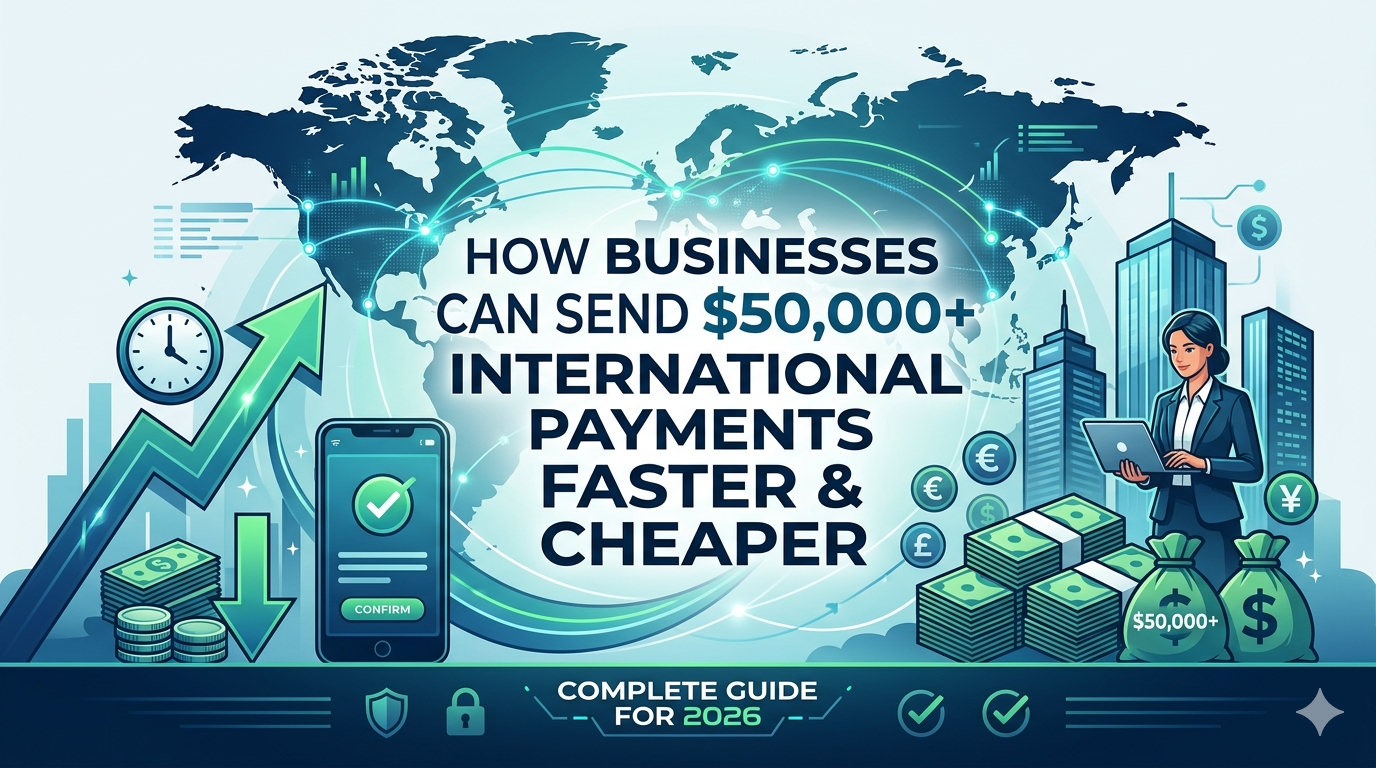
Sending large international payments should not be complicated, slow, or expensive.
But for most businesses, it still is.
If your company regularly sends payments above $50,000 — and especially up to $10,000,000, you’ve likely experienced:
Delays of multiple days
High transaction and hidden fees
Currency conversion losses
Lack of transparency
Dependency on multiple intermediaries
These are not small issues. They directly impact:
Cash flow
Profit margins
Vendor relationships
Business scalability
In this guide, we’ll break down:
Why high-value international payments are still inefficient
What businesses actually need today
How modern payment infrastructure solves these problems
And how you can send large payments faster and cheaper
What Are High-Value International Payments?
High-value international payments refer to transactions typically above:
$50,000 to $10,000,000+
These are commonly used for:
Supplier and vendor payments
Cross-border trade
Large invoice settlements
Enterprise partnerships
Global service payments
Because of their size, these payments require:
High security
Speed
Cost efficiency
Reliability
Unfortunately, traditional systems were not designed for this level of efficiency.
The Reality: Why Sending Large International Payments is Still Difficult
Even in 2026, businesses face major friction when moving money globally.
Let’s break it down.
1. High Transaction Costs
When sending money internationally, you don’t just pay one fee.
You pay:
Bank transfer fees
Correspondent bank charges
FX conversion fees
Hidden margins
Total cost can reach 5%–10% per transaction
Example:
If you send $1,000,000:
You may lose $50,000–$100,000
That’s a massive cost for simply moving money.
2. Slow Settlement Times
Traditional systems rely on multiple banks.
This leads to:
2–5 business days for processing
Delays due to approvals
Time zone differences
For high-value transactions, this delay can disrupt operations significantly.
3. Currency Conversion Losses
International payments often involve currency exchange.
This introduces:
Exchange rate fluctuations
Conversion fees
Unpredictable final amounts
Businesses lose money without even realizing it.
4. Lack of Transparency
Traditional payment systems:
Don’t provide real-time tracking
Involve multiple intermediaries
Offer limited visibility
You don’t always know where your money is.
5. Increased Risk for Large Transactions
The bigger the payment, the higher the risk:
Delays
Compliance issues
Transaction failures
What Businesses Actually Need Today
Modern businesses don’t want complexity.
They want:
Fast transactions
Lower costs
Predictable outcomes
Global accessibility
Simple processes
In short: efficiency and control
A New Approach: Digital Payment Infrastructure
To solve these problems, businesses are moving away from traditional systems.
Instead, they are adopting:
Stablecoin-based cross-border payment systems
This approach uses digital currencies backed by USD to move money faster and more efficiently.
What Makes This Approach Better?
Let’s compare clearly.
Instead of:
Banks
Intermediaries
Delays
You get:
Direct transfers
Faster settlement
Lower costs
Greater transparency
Key Benefits for High-Value Payments
1. Faster Transactions
Payments are completed within minutes instead of days.
This improves:
Cash flow
Business operations
Vendor relationships
2. Lower Transaction Costs
By removing intermediaries, businesses can:
Reduce costs by up to 70%
3. No Currency Risk
Payments are made using USD-backed stable digital currency.
No exchange rate fluctuations
No hidden conversion losses
4. Global Accessibility
Payments can be sent anywhere without traditional banking limitations.
5. Full Transparency
Every transaction is:
Trackable
Secure
Verifiable
Step-by-Step: How to Send Large International Payments Faster
Step 1: Choose the Right Platform
Select a solution that supports:
High-value transactions ($50K–$10M)
Cross-border payments
Secure infrastructure
Step 2: Set Up Access
You can:
Use a dashboard
Integrate via APIs
Step 3: Initiate Payment
Enter recipient details
Specify amount
Step 4: Process Transaction
The payment is executed instantly.
Step 5: Settlement
Funds are received within minutes.
Real-World Examples
Example 1: Supplier Payment
A business sends $250,000 to an international supplier.
Traditional method:
3–5 days
High fees
Modern method:
Minutes
Lower cost
Example 2: Enterprise Transaction
A company transfers $2,000,000 globally.
No delays
No FX loss
Transparent process
Example 3: Recurring Global Payments
A company sends multiple payments monthly.
Faster + scalable + efficient
Unique Differentiator: Additional Value with Every Payment
Modern platforms offer something unique:
A free digital payment token (eSgC) with every transaction
This provides:
Additional financial value
Tradable digital asset
Extra benefit beyond the payment
This is a major innovation compared to traditional systems.
Africa & Latin America: Where This Matters Most
Africa
Countries like:
Nigeria
Kenya
South Africa
Face:
High payment costs
Slow banking systems
Limited infrastructure
Faster payment systems are critical here.
Latin America
Countries like:
Brazil
Mexico
Face:
Currency volatility
Payment inefficiencies
Stable digital payments solve these challenges.
Industry Use Cases
1. Fintech Companies
Global transactions
Faster processing
2. E-commerce Businesses
Accept international payments
Reduce costs
3. SaaS Companies
Subscription payments globally
Improved cash flow
4. Enterprises
Large invoice settlements
Cross-border operations
Compliance & Security
For high-value payments, security is critical.
Businesses should ensure:
KYC compliance
AML processes
Secure infrastructure
Transaction monitoring
Frequently Asked Questions (SEO + AI Optimized)
What is the fastest way to send $50,000+ internationally?
Using modern digital payment systems enables faster settlement compared to traditional banking.
How can businesses reduce international payment costs?
By eliminating intermediaries and using more efficient payment infrastructure.
Are large international payments safe?
Yes, when using secure and compliant platforms.
Can businesses send millions internationally?
Yes, modern systems support high-value transactions efficiently.
The Future of High-Value Payments
The global payment landscape is changing rapidly.
Businesses are moving toward:
Faster systems
Lower costs
Digital infrastructure
Global scalability
This is no longer the future — it’s already happening.
Conclusion
Sending large international payments doesn’t have to be slow, expensive, or complicated.
Modern payment systems allow businesses to:
Send payments faster
Reduce costs significantly
Eliminate currency risks
Scale globally with ease
Final Takeaway
If your business is still using traditional systems for high-value payments:
You are losing time, money, and efficiency.
There is a better way.
Final Call to Action
Upgrade your payment infrastructure and start sending international payments faster, cheaper, and more efficiently.
The future of global payments is already here.