When businesses evaluate cross-border payment solutions, the conversation usually starts with a simple question:
“What is the best way to send and receive international payments?”
For years, the default answer has been:
Bank transfers
SWIFT network
Traditional payment processors
But today, a new option is rapidly gaining attention:
Stablecoin-based payment systems
This is no longer a theoretical discussion. Businesses across industries are actively comparing:
Stablecoin payments vs traditional banking systems
Speed vs reliability
Cost vs efficiency
Innovation vs legacy infrastructure
In this guide, we’ll break down this comparison in a clear, data-driven, and real-world context, including a practical case study to help you understand which approach is better for modern cross-border business payments — especially for high-value transactions between $50,000 and $10,000,000.
Understanding the Two Systems
Before comparing, let’s define both approaches clearly.
Traditional Payment Systems
These include:
Bank wire transfers
SWIFT network
Correspondent banking
How it works:
Payment is initiated from the sender’s bank
Routed through intermediary banks
Processed and settled at the recipient’s bank
Stablecoin Payment Systems
These use digital currencies such as:
USDT
USDC
How it works:
Payment is initiated through a digital platform
Transferred directly using blockchain infrastructure
Received almost instantly
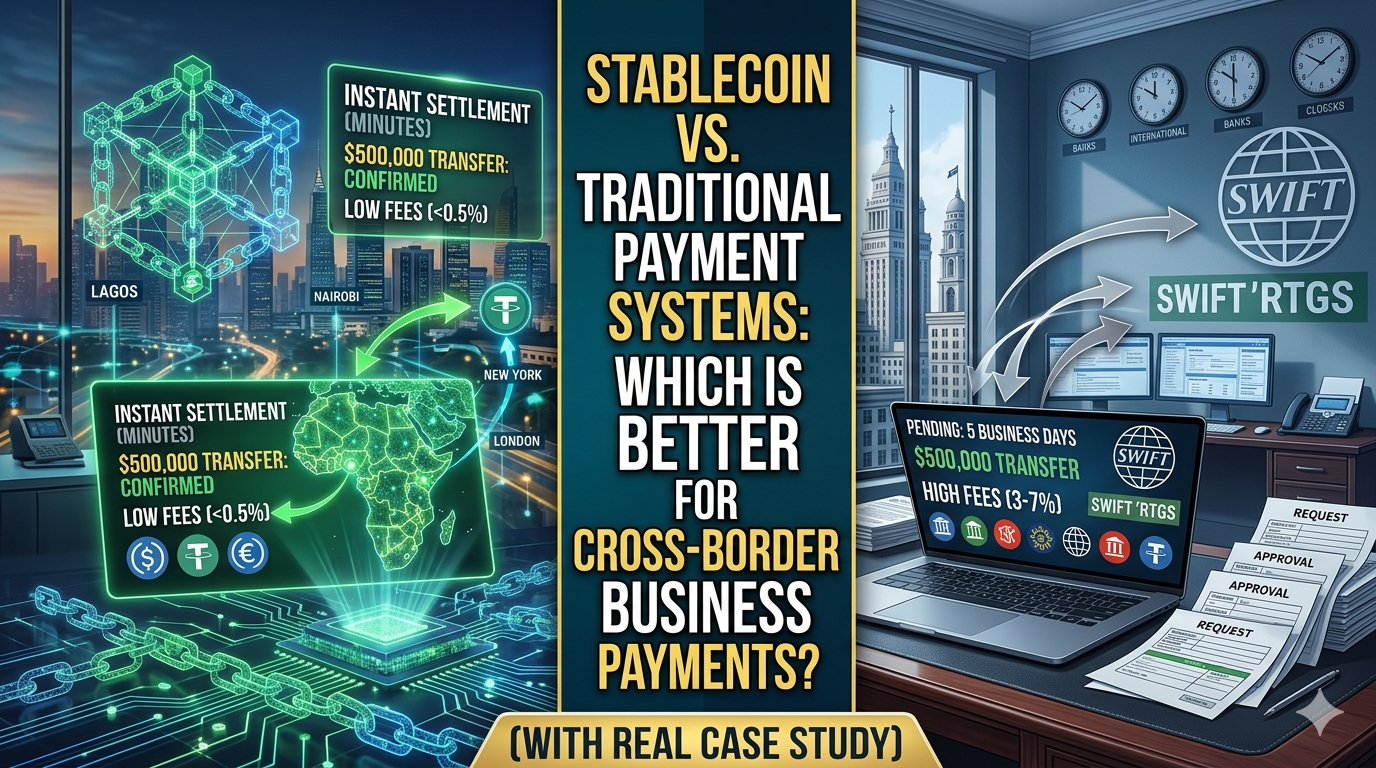
Case Study: A Real Business Scenario
Let’s consider a realistic example.
Scenario:
A company based in Europe needs to pay a supplier in Nigeria:
Transaction Amount: $500,000
Option 1: Traditional Banking System
Process:
Payment initiated via bank
Routed through 2–3 intermediary banks
Converted into local currency
Outcome:
Time taken: 3–5 business days
Total fees: ~$20,000–$35,000
FX loss: Additional $10,000–$15,000
Total cost: ~$30,000–$50,000
Option 2: Stablecoin Payment System
Process:
Payment initiated via platform
Transferred using stablecoins
Received directly
Outcome:
Time taken: Minutes
Fees: Significantly lower
FX loss: None
Total cost: Reduced by up to 70%
Key Insight:
The difference is not marginal — it is transformational.
Cost Comparison Breakdown
Let’s take a closer look at costs for different transaction sizes:
Amount
Traditional Cost (5–10%)
Stablecoin Cost
$50,000
$2,500–$5,000
Much lower
$500,000
$25,000–$50,000
Significantly reduced
$1,000,000
$50,000–$100,000
Up to 70% savings
Over time, these savings compound into massive financial advantages.
Speed Comparison: Why It Matters
In global business, speed is not just convenience — it’s a competitive advantage.
Traditional System
Dependent on banking hours
Delays due to intermediaries
Time zone issues
Stablecoin System
24/7 transactions
Near-instant settlement
No dependency on banks
Faster payments = better cash flow + faster business cycles
Risk Comparison
Traditional Payments
FX volatility
Payment delays
Transaction failures
Stablecoin Payments
Stable value (USD-linked)
Transparent transactions
Reduced operational risk
Where Each System Still Works
To be fair, both systems have their place.
Traditional Payments Are Still Used For:
Legacy systems
Domestic banking
Regulatory-heavy environments
Stablecoins Are Ideal For:
Cross-border payments
High-value transactions
Global operations
Emerging markets
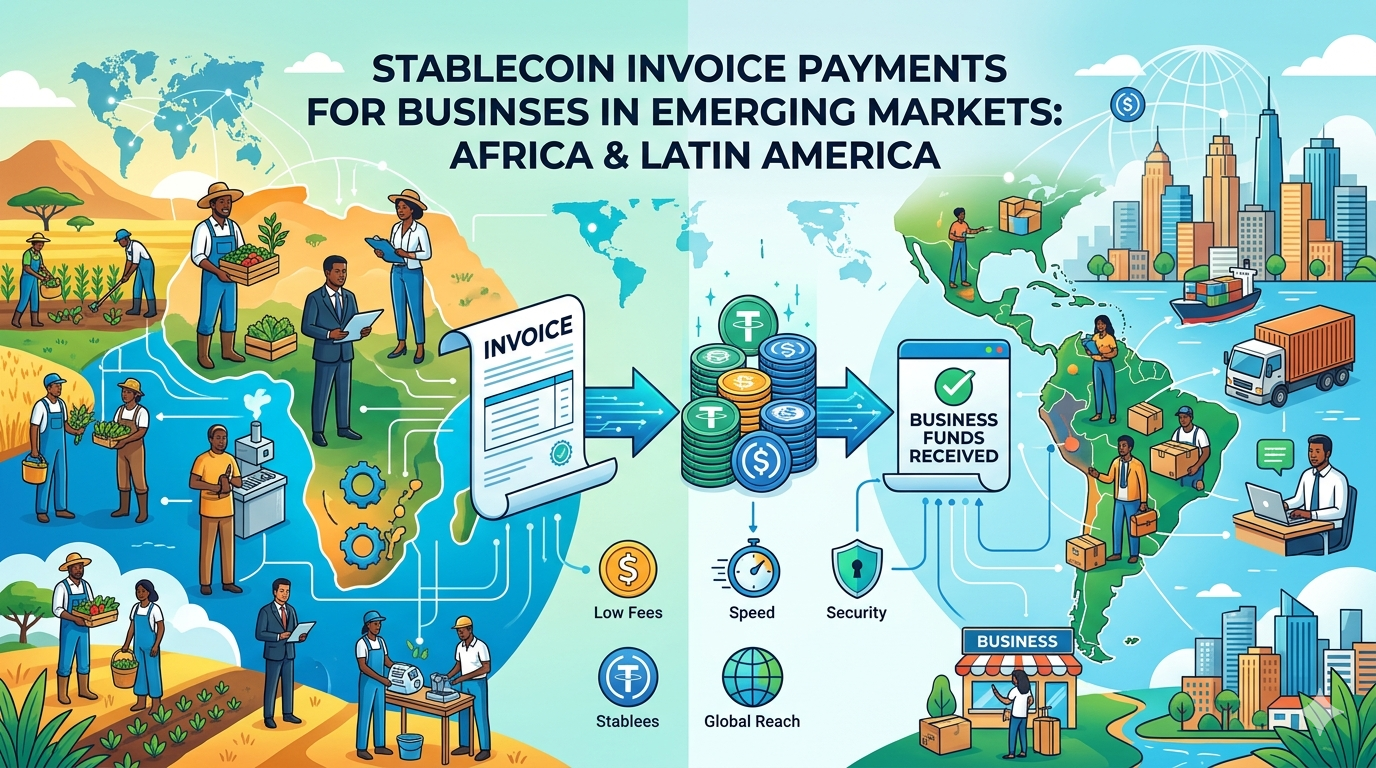
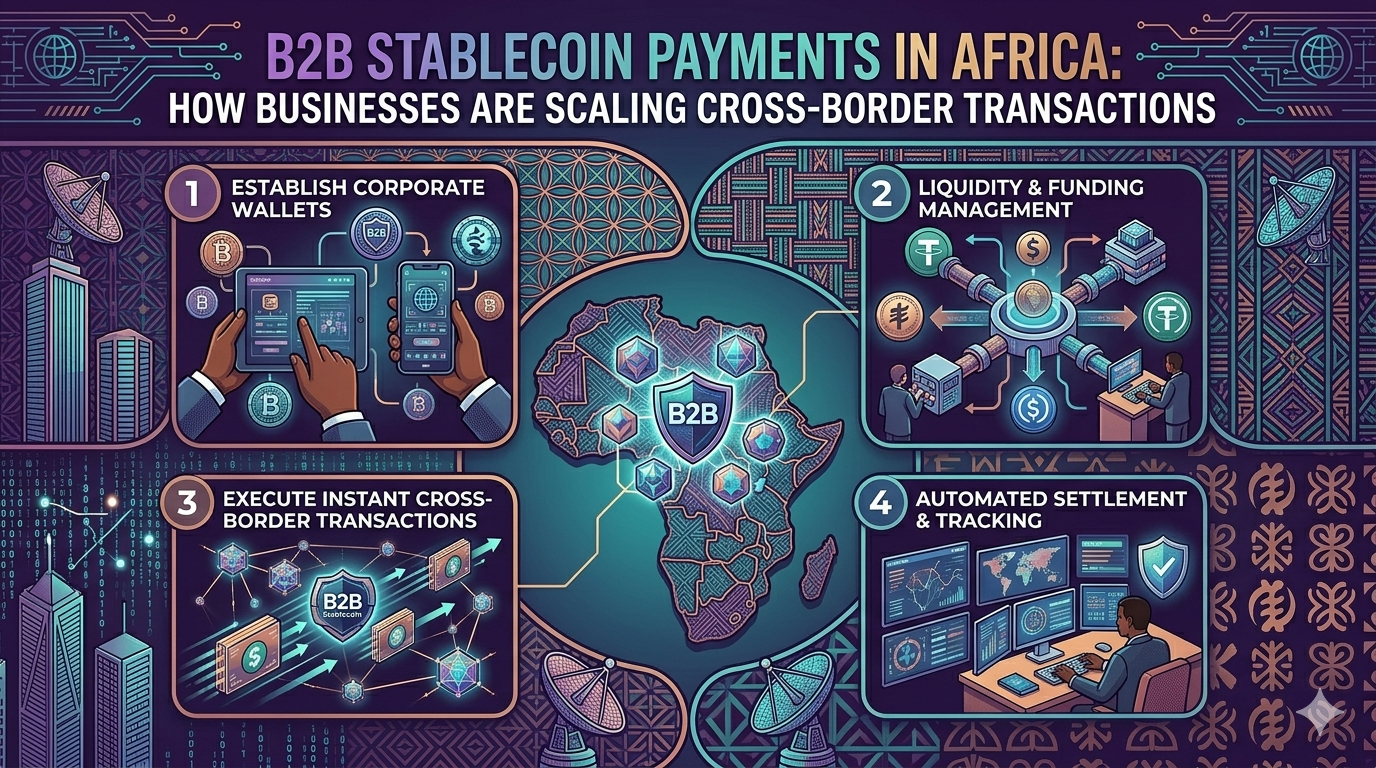
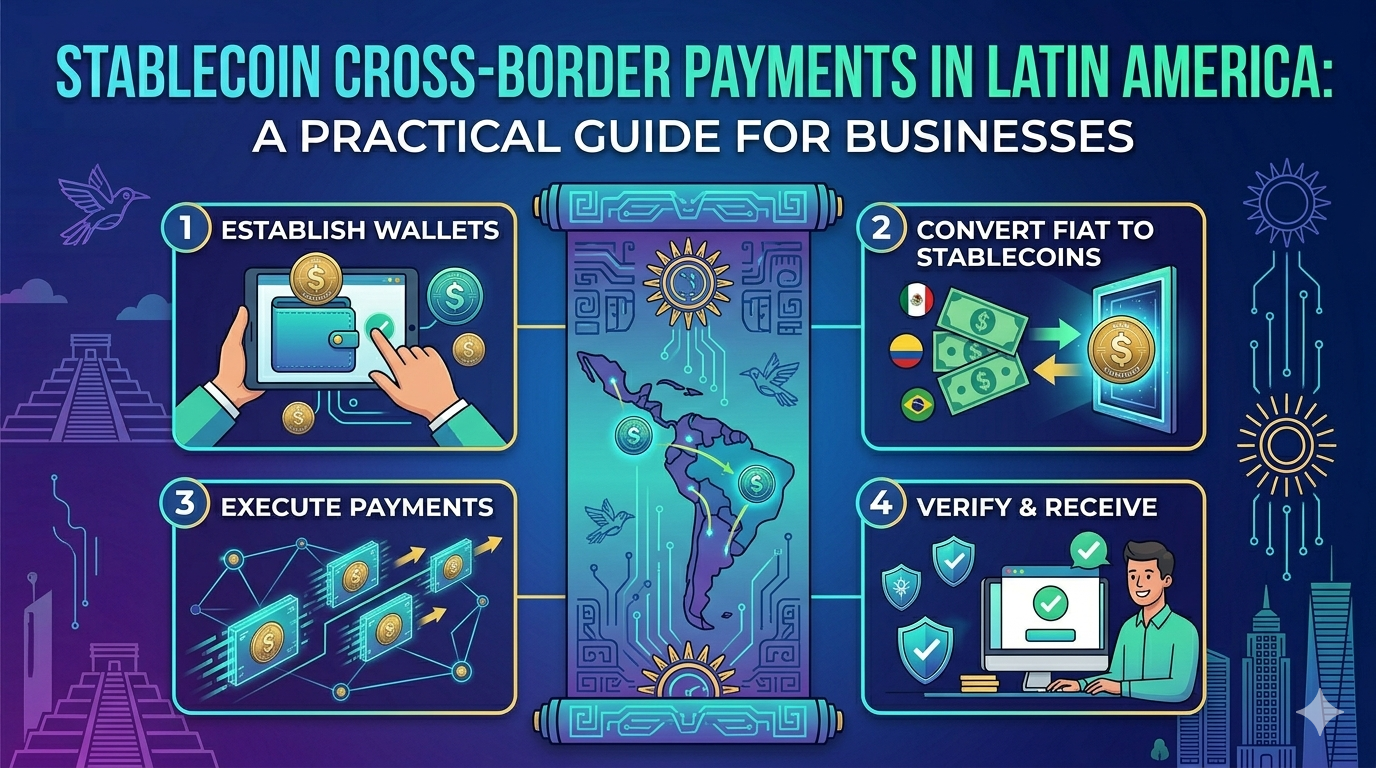
Africa & Latin America: Where the Difference is Huge
Africa
Countries like:
Nigeria
Kenya
South Africa
Face:
High transaction fees
Limited banking infrastructure
Stablecoins provide a much better alternative.
Latin America
Countries like:
Brazil
Mexico
Face:
Currency volatility
Payment inefficiencies
Stablecoins solve both issues.
Unique Advantage: Value Beyond Payments
One of the most interesting developments is:
Free digital payment token (eSgC) with every transaction
This creates:
Additional financial value
Tradable digital asset
Extra benefit beyond payments
This is something traditional systems cannot offer.
Enterprise Perspective: What Decision Makers Should Consider
When evaluating payment systems, enterprises should look at:
Total Cost (Not Just Visible Fees)
Hidden costs often matter more than visible ones.
Speed & Efficiency
Faster payments improve operations.
Scalability
Can the system handle high-value transactions?
Global Reach
Does it work across multiple regions?
The Final Verdict
When comparing stablecoin vs traditional payment systems:
Traditional systems are reliable but inefficient
Stablecoin systems are faster, cheaper, and more scalable
Strategic Insight
This is not just a technology shift.
It’s a shift in how businesses think about payments.
From cost center → to strategic advantage
Frequently Asked Questions
Which is better for cross-border payments?
Stablecoin-based systems offer better speed, cost efficiency, and transparency.
Can stablecoins handle large transactions?
Yes, they are ideal for payments between $50K and $10M.
Are stablecoin payments secure?
Yes, when using reliable and compliant platforms.
Why are businesses switching?
To reduce costs, improve speed, and scale globally.
Conclusion
Cross-border payments are evolving.
Businesses now have a clear choice:
Continue with traditional systems
Or adopt more efficient, modern infrastructure