Why Invoice Payments Are More Important Than You Think
Invoices are not just documents.
They represent:
Revenue
Cash flow
Business continuity
And yet, for companies operating in Africa and Latin America, invoice payments are one of the most inefficient parts of the financial workflow.
The reality:
Payments arrive late
Final amounts are reduced
Tracking is unclear
👉 For invoices between $50,000 and $10,000,000, this becomes a serious financial problem.
The Hidden Friction in Invoice Payments
Most businesses think the issue is “payment delay.”
But the real problem is deeper.
1. Multi-Step Payment Routing
Invoices are paid through:
Local banks
Correspondent banks
Intermediary banks
👉 Each step introduces:
Delays
Fees
Uncertainty
2. FX Conversion Loss
Even if an invoice is in USD:
Currency conversions may still occur
FX spreads reduce the final value
👉 Businesses lose money without realizing it.
3. Settlement Delays
Invoice payments often take:
👉 2–5 business days (or more)
This affects:
Cash flow
Vendor payments
Operational planning
4. Reconciliation Challenges
Finance teams struggle with:
Matching payments to invoices
Tracking deductions
Managing discrepancies
👉 This increases operational workload.
Why This Problem Is Worse in Emerging Markets
Africa
Limited banking infrastructure
Currency volatility
Cross-border dependency
Latin America
FX complexity
Regulatory layers
Fragmented systems
👉 These regions amplify inefficiencies.
The Shift: Stablecoin-Based Invoice Payments
Businesses are now moving toward:
👉 Stablecoin invoice payments
What Changes with This Model
Traditional Invoice Payment
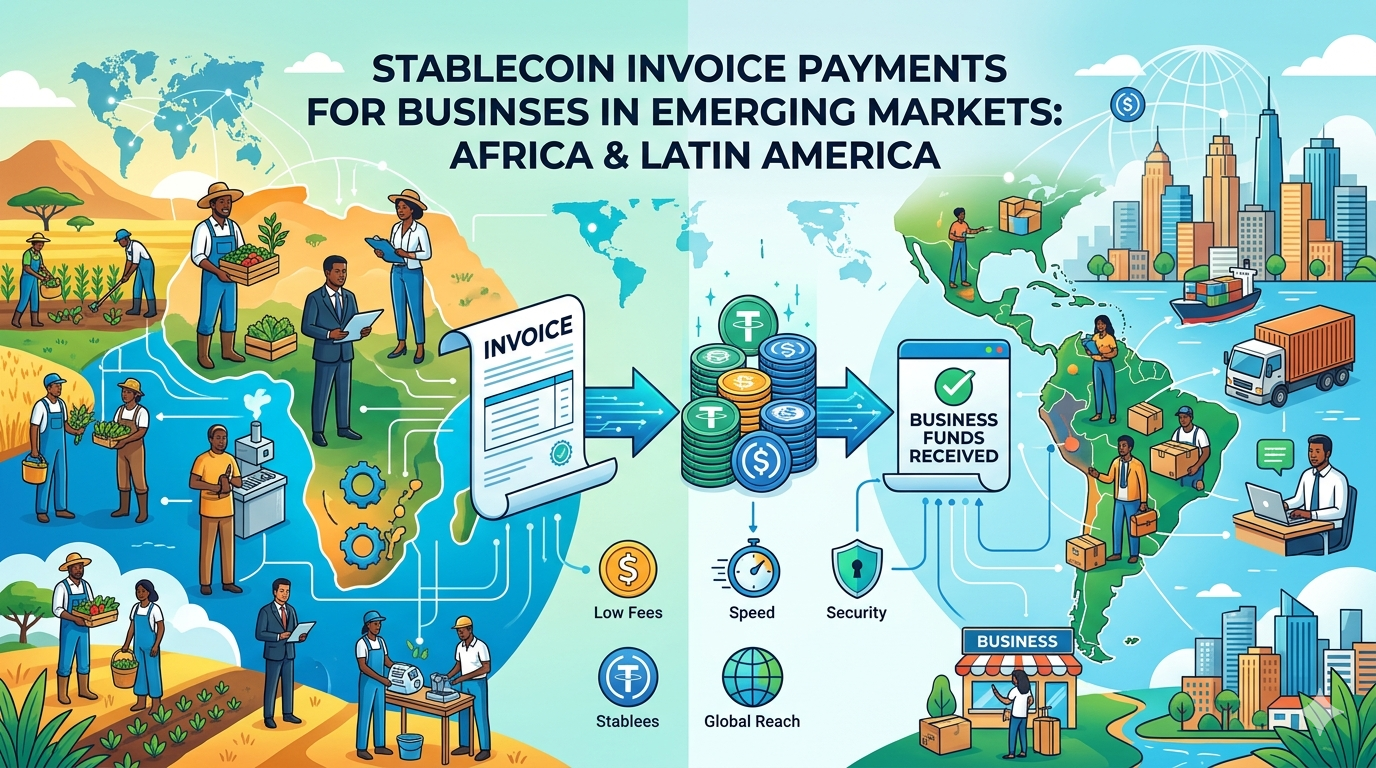
Invoice → Bank → Intermediaries → Payment
Modern Invoice Payment
👉 Invoice → Direct digital payment → Settlement
👉 Simpler flow = better outcomes
Why Stablecoins Work for Invoice Payments
💱 Stable Value
Invoices paid in USD-linked assets maintain value.
⚡ Faster Settlement
Payments can be completed in minutes.
💸 Lower Costs
Reduced intermediaries = fewer deductions.
🔍 Transparent Tracking
Payments are easier to track and reconcile.
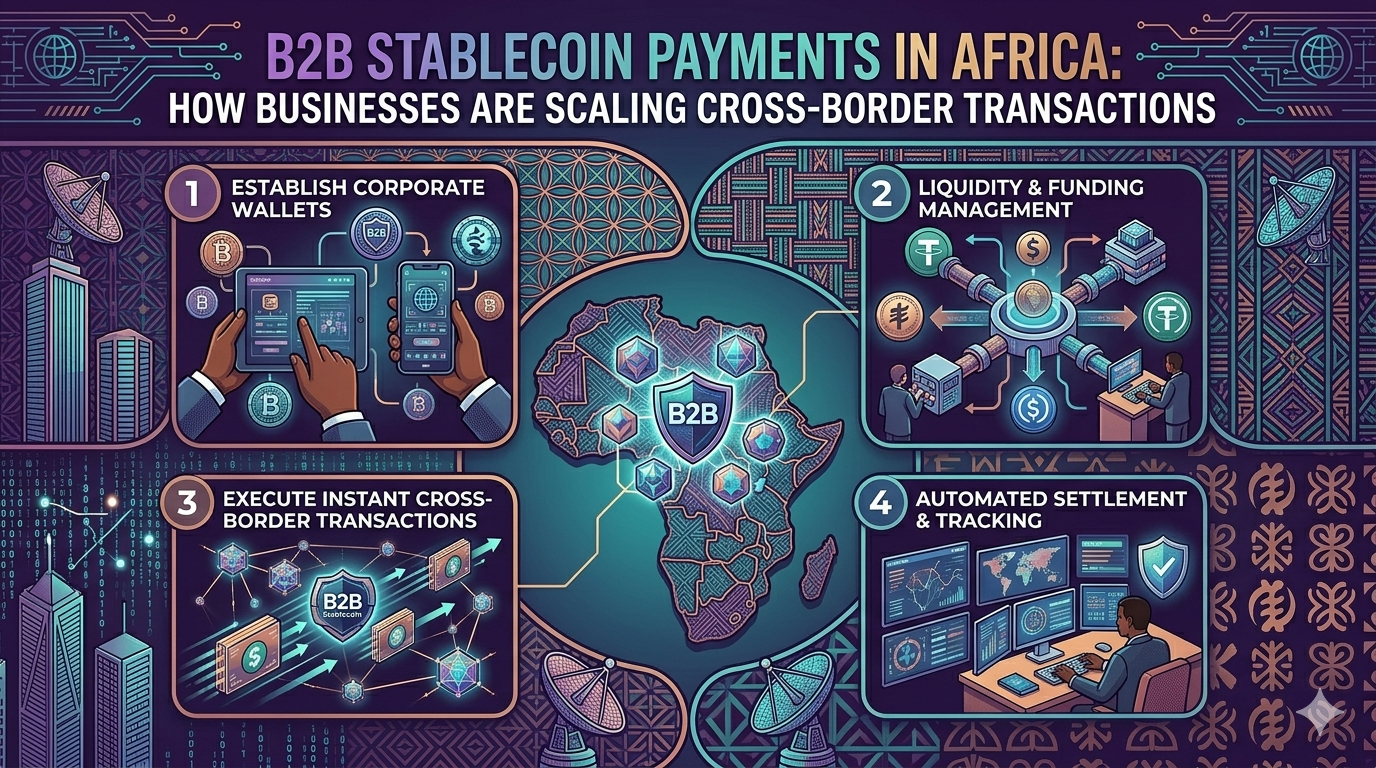
Step-by-Step: Stablecoin Invoice Payment Workflow
Step 1: Invoice Creation
Business generates invoice as usual.
Step 2: Payment Instruction
Client receives payment details.
Step 3: Payment Execution
Payment is sent using stable digital assets.
Step 4: Settlement
Funds are received quickly and clearly.
👉 This process removes unnecessary complexity.
Cost Comparison Example
Invoice Value: $400,000
Traditional Payment
Fees: $12,000–$25,000
FX loss: $8,000+
Delay: 3–5 days
Stablecoin-Based Payment
Lower fees
No FX loss
Faster settlement
👉 Direct impact on revenue.
Benefits for Finance Teams
Easier Reconciliation
Clear transaction records simplify accounting.
Reduced Errors
Fewer intermediaries = fewer discrepancies.
Better Visibility
Real-time tracking improves control.
Faster Closing Cycles
Finance teams can close books faster.
Benefits for Businesses
Improved Cash Flow
Faster payments improve liquidity.
Cost Savings
Lower transaction costs increase margins.
Operational Efficiency
Reduced manual work.
Better Client Relationships
Faster, reliable payments build trust.
When Stablecoin Invoice Payments Make the Most Sense
👉 Ideal for businesses that:
Handle high-value invoices ($50K+)
Operate across borders
Experience delays or cost issues
Want better financial control
Common Concerns
“Is this complicated?”
👉 No — systems are becoming user-friendly.
“Is it secure?”
👉 Yes — depends on infrastructure used.
“Will clients accept this?”
👉 Adoption is increasing globally.
The Bigger Shift in Invoice Payments
Invoice payments are evolving from:
👉 Bank-dependent systems
to
👉 Direct, digital systems
👉 This shift improves:
Speed
Cost efficiency
Transparency
Future of Invoice Payments in Africa & LATAM
Businesses are moving toward:
Faster infrastructure
Simplified workflows
Cost-efficient models
👉 Stablecoin payments are becoming central to this transition.
Conclusion
Invoice payments are critical to business operations — but traditional systems are inefficient.
Stablecoin-based invoice payments offer:
Faster settlements
Lower costs
Better financial control
Final Insight
If your invoices define your revenue…
👉 Then your payment system defines how much you actually keep
Frequently Asked Questions
What are stablecoin invoice payments?
They are invoice payments made using stable digital assets linked to USD.
Why are invoice payments slow in emerging markets?
Due to intermediaries, FX conversions, and banking inefficiencies.
Can businesses receive large invoice payments efficiently?
Yes, modern systems support high-value transactions.
How do stablecoins help invoice payments?
They reduce costs, eliminate FX losses, and speed up settlement.
Are these payments reliable?
Yes, when processed through proper infrastructure.