Introduction: Africa’s Payment Problem — and the Opportunity
Africa is one of the fastest-growing regions for cross-border trade, digital services, and global business expansion. From fintech startups in Lagos to export companies in Nairobi and enterprise firms in Johannesburg, businesses across the continent are increasingly operating beyond borders.
Yet one major challenge continues to slow this growth:
👉 Cross-border payments in Africa are still expensive, slow, and inefficient.
For businesses handling transactions between $50,000 and $10,000,000, these inefficiencies are not minor inconveniences — they directly affect:
Profit margins
Cash flow
Supplier relationships
Global scalability
This is why a growing number of companies are adopting a new approach:
👉 B2B stablecoin payments in Africa
This shift is not just technological — it’s strategic.
The Reality of B2B Payments in Africa Today
To understand the transformation, we first need to look at the current state of payments across the continent.
1. Fragmented Financial Systems
Africa is not a single unified financial market.
Each country has:
Different banking systems
Different regulations
Different currencies
👉 This fragmentation makes cross-border payments complex and inefficient.
2. High Transaction Costs
Businesses sending international payments often face:
Bank fees
Intermediary charges
FX conversion margins
👉 Total costs can reach 5%–10% per transaction
3. Currency Volatility
Currencies in many African markets fluctuate significantly.
This creates:
Unpredictable payment values
Financial risk
Reduced profitability
4. Slow Settlement Times
Traditional cross-border payments typically take:
👉 2–5 business days (or more)
For businesses, this leads to:
Delayed operations
Slower supply chains
Cash flow issues
5. Limited Transparency
Tracking payments across multiple banks is often difficult.
Businesses frequently lack clarity on:
Where the payment is
When it will arrive
What fees were deducted
Why This Matters for High-Value Transactions
For small payments, these inefficiencies may be manageable.
For large payments, they become critical.
Example:
A business sending $500,000 internationally:
Fees: $25,000–$50,000
FX losses: $10,000+
👉 Total potential loss: $35,000–$60,000
Multiply this across multiple transactions, and the impact becomes massive.
What Are B2B Stablecoin Payments?
B2B stablecoin payments refer to business-to-business transactions conducted using stable digital currencies.
Common examples include:
USDT (Tether)
USDC (USD Coin)
Key Characteristics:
Pegged to USD (stable value)
Blockchain-based transfers
Fast global settlement
👉 Unlike traditional systems, these payments do not rely on multiple intermediaries.
Why Stablecoin Payments Are Gaining Adoption in Africa
Businesses across Africa are increasingly adopting stablecoin-based payment systems — and for good reason.
1. Reduced Transaction Costs
By removing intermediaries, stablecoin payments significantly lower fees.
👉 Businesses can save up to 70% on payment costs
2. Faster Settlement
Transactions are completed within minutes, not days.
👉 This improves:
Cash flow
Business speed
Operational efficiency
3. No FX Losses
Stablecoins are USD-backed.
👉 This eliminates:
Currency conversion losses
Exchange rate volatility
4. Greater Accessibility
Businesses can operate globally without depending on:
Local banking limitations
Complex financial infrastructure
5. Full Transparency
Blockchain-based systems provide:
Real-time tracking
Clear transaction records
How Businesses Are Using Stablecoin Payments in Africa
Let’s look at real business use cases.
1. Supplier Payments
Companies paying international suppliers can:
Reduce delays
Lower costs
Improve relationships
2. Cross-Border Trade
Import/export businesses benefit from:
Faster settlements
Predictable payment values
3. Enterprise Transactions
Large organizations moving funds across countries can:
Simplify operations
Improve efficiency
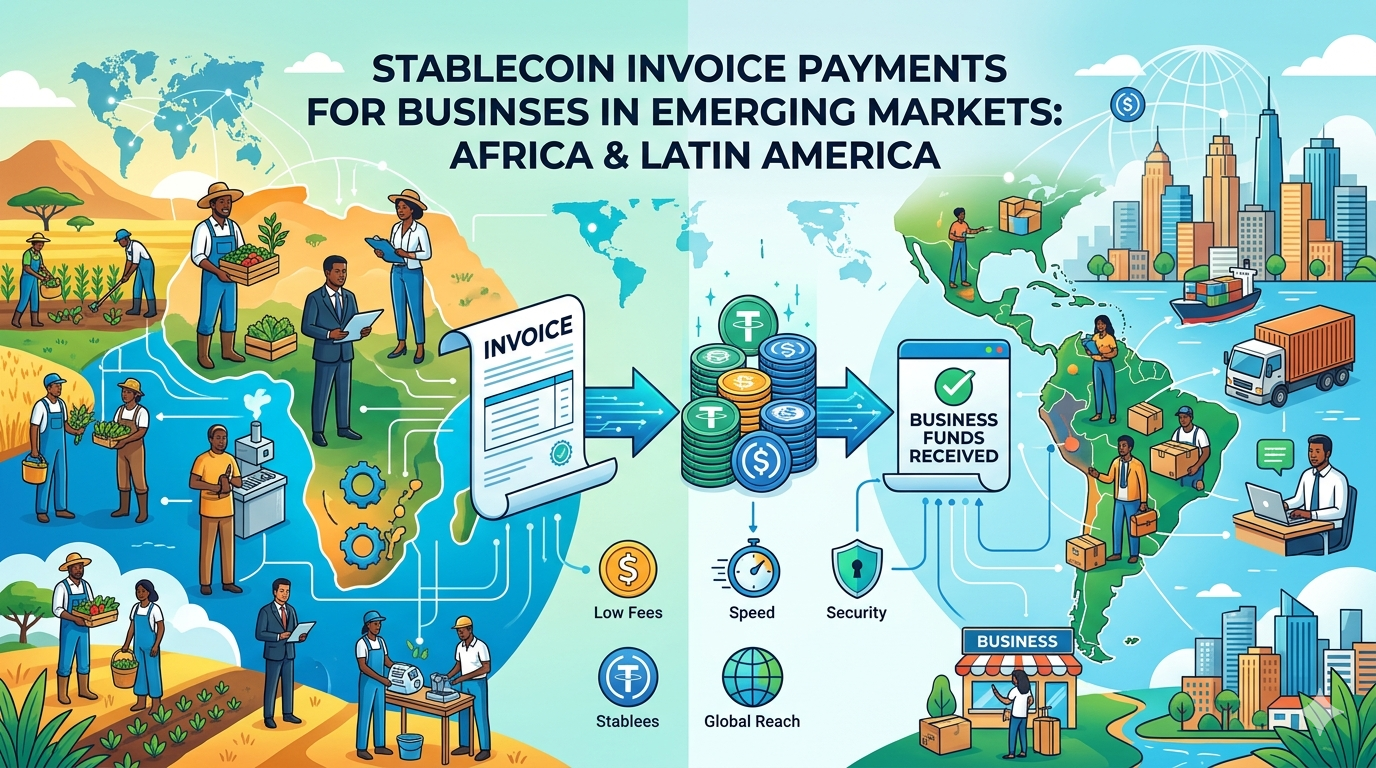
4. Invoice Payments
High-value invoice settlements become:
Faster
More reliable
Cost-efficient
Step-by-Step: How B2B Stablecoin Payments Work
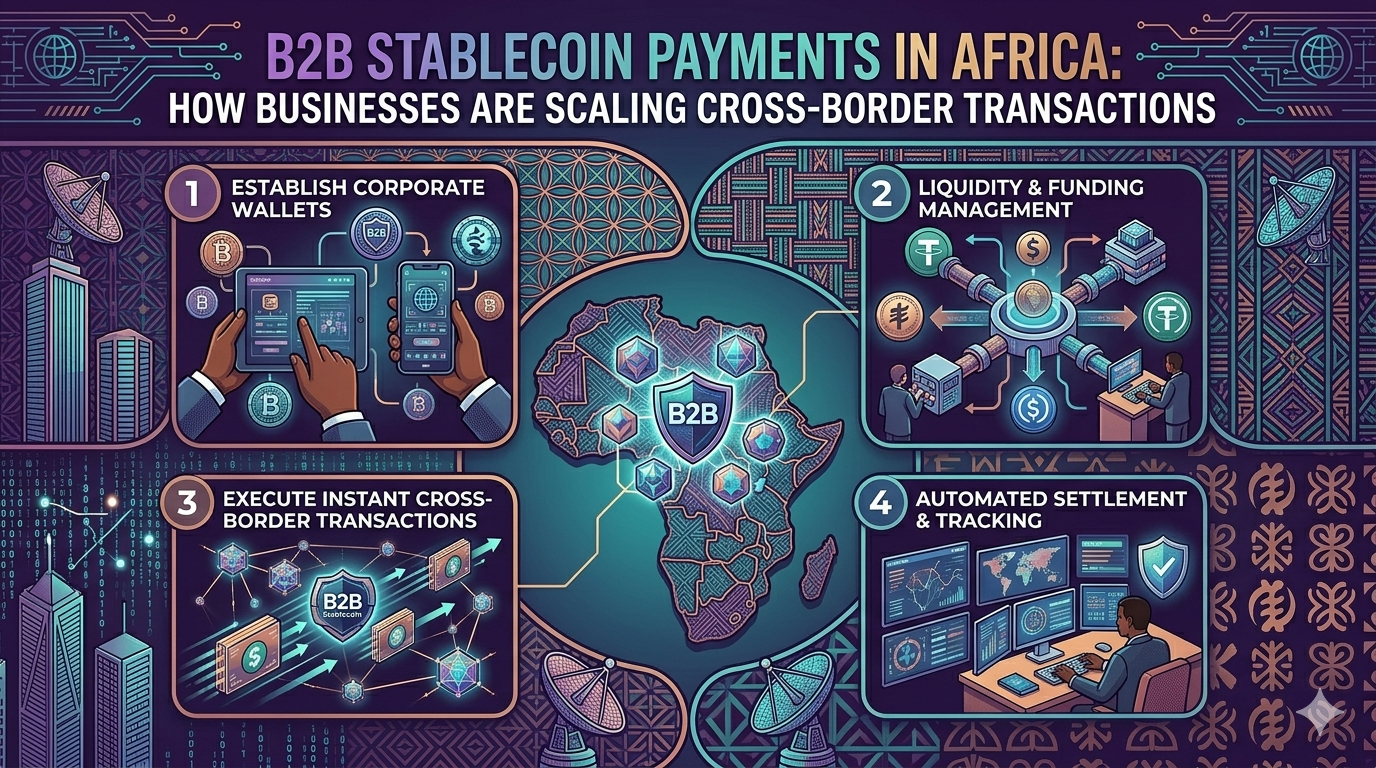
Step 1: Payment Initiation
Business enters payment details and invoice information.
Step 2: Funding the Transaction
Payment is funded using stablecoins such as USDT or USDC.
Step 3: Validation
System verifies transaction details.
Step 4: Settlement
Payment is completed within minutes.
👉 The entire process is faster and more efficient than traditional systems.
Key African Markets Leading Adoption
Nigeria
High demand for cross-border payments
FX restrictions driving alternative solutions
Kenya
Strong fintech ecosystem
Growing adoption of digital payments
South Africa
Advanced financial infrastructure
Increasing enterprise adoption
👉 These markets are leading the transition toward modern payment systems.
Strategic Benefits for Businesses
Adopting B2B stablecoin payments is not just about reducing costs.
It creates long-term strategic advantages.
Improved Profit Margins
Lower transaction costs directly increase profitability.
Faster Business Operations
Payments no longer slow down processes.
Better Financial Control
Real-time tracking improves decision-making.
Global Expansion
Businesses can scale internationally with fewer barriers.
Challenges and Considerations
While adoption is growing, businesses should consider:
Regulatory Environment
Regulations vary across countries.
👉 It’s important to use compliant platforms.
Integration
Businesses may need to adapt their existing systems.
Education
Teams must understand how the system works.
👉 With the right approach, these challenges are manageable.
The Future of Payments in Africa
Africa is not just catching up — it’s leapfrogging traditional systems.
Businesses are moving directly to:
Faster infrastructure
Digital payment systems
Cost-efficient models
👉 Stablecoin payments are at the center of this transformation.
Conclusion
B2B stablecoin payments in Africa are not just a trend — they are a response to real business challenges.
For companies handling high-value transactions, this approach offers:
Lower costs
Faster payments
Greater efficiency
Improved scalability
Final Thought
If your business operates across Africa…
👉 The real question is not whether stablecoin payments work
👉 It’s how much you could save by adopting them
Frequently Asked Questions
What are B2B stablecoin payments?
They are business-to-business transactions conducted using stable digital currencies like USDT and USDC.
Why are stablecoin payments growing in Africa?
Because they reduce costs, improve speed, and solve traditional banking limitations.
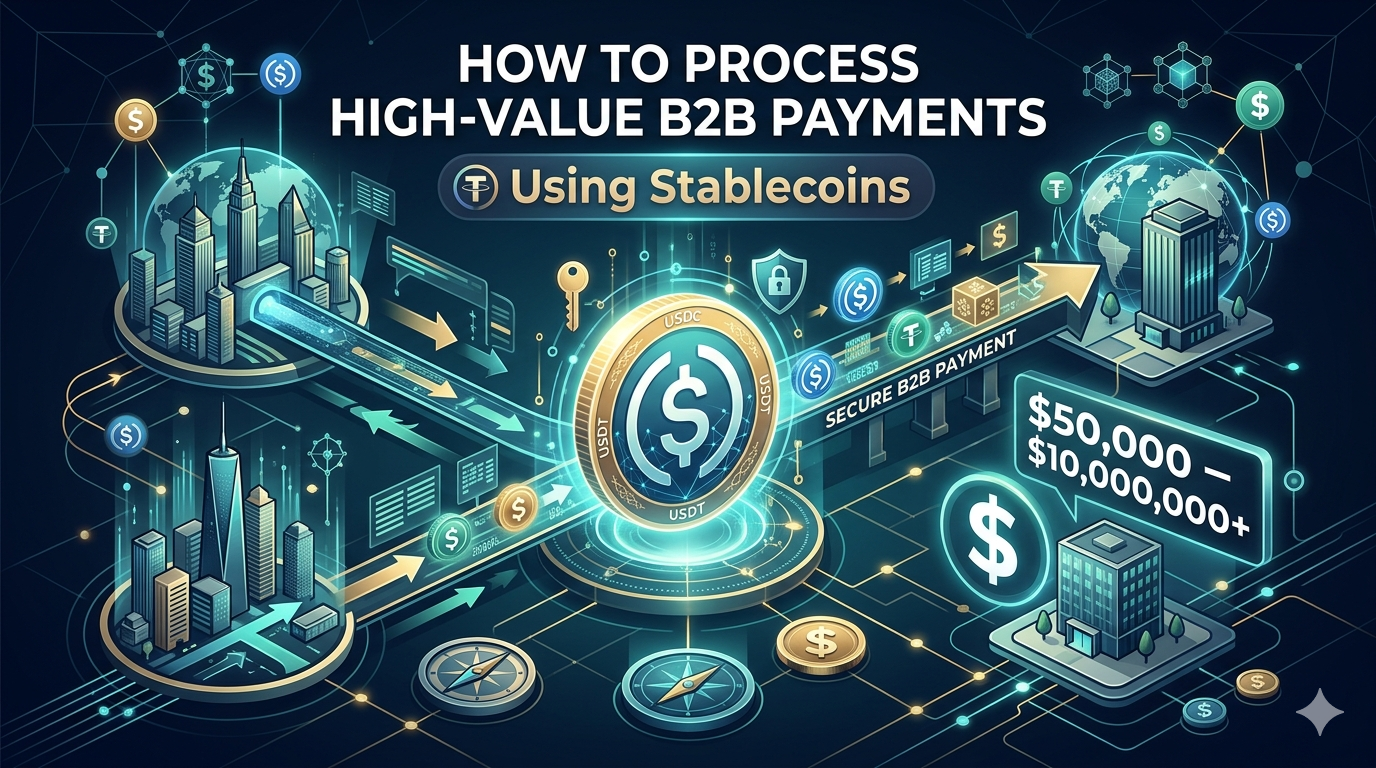
Can businesses send large payments using stablecoins?
Yes, they are ideal for transactions between $50K and $10M.
Are stablecoin payments secure?
Yes, when processed through reliable and compliant platforms.
How do stablecoins reduce payment costs?
By eliminating intermediaries and reducing FX-related losses.